
The Wealthy Barber
The Fully Updated All-Time Canadian Classic
The Fully Updated All-Time Canadian Classic
It’s 36 years since David Chilton released his Canadian classic Common-Sense Guide to Successful Financial Planning. He’s just released an updated version. I’ve just finished reading it, and it’s as relevant now as it was then.
While it’s built around the same storyline, with Roy the barber and his buddies explaining financial planning to five people in the 20-30 are range, it is indeed fully updated to today’s reality, touching on Tiktok and the changes in US policy.
The updated young characters cover a decent cross-section of today’s population:
· Matt, the teacher
· His pregnant wife Maddie, an interior designer
· Jess, the single, successful entrepreneur
· Kyle, the single ‘idiot-savant’
· Sourov, the single immigrant working 3 jobs
Each chapter is set as a discussion between Roy and the young characters, with Roy’s buddies James, Jimmy and Clyde chiming in with context and sarcasm. There’s a good amount of trash talk between the characters as they travel through their learning experience.
Once the storyline is set up, each chapter builds on the previous, bringing focus on a specific subject area:
· Budget
· Save 10%
· Investing wisdom and the power of compounding
· Protection through insurance and wills
· Home buying and debt management
· Manage your spending habits and live within your means
· Stories about consumption, credit cards and status
Throughout, Chilton ensures the information is current to today. There’s significant discussion on the challenges Canadian youth face in trying to make ends meet let alone trying to afford a house. Investing discussion includes RRSPs and RESPs from the original book’s publishing in 1989, and goes on to tackle TFSAs, First Home Savings Accounts (FHSAs), Index funds and ETFs to name a few.
This book is aimed at the 20-40 age group, which includes our boys. They are each getting a book for Christmas and I’d suggest you consider doing the same for your children, grandchildren, cousins and siblings in this age range.
Chilton also started The Wealthy Barber Podcast this past year. It includes many high caliber guests covering not only the books’ age group but also many topics applicable to late career and retirees. Well worth looking through the topics and listening to those relevant to your situation.
Invest in yourself with financial education. Be Prepared.
CPP, OAS, & GIS
Facts and a Few Thoughts
Facts and a Few Thoughts
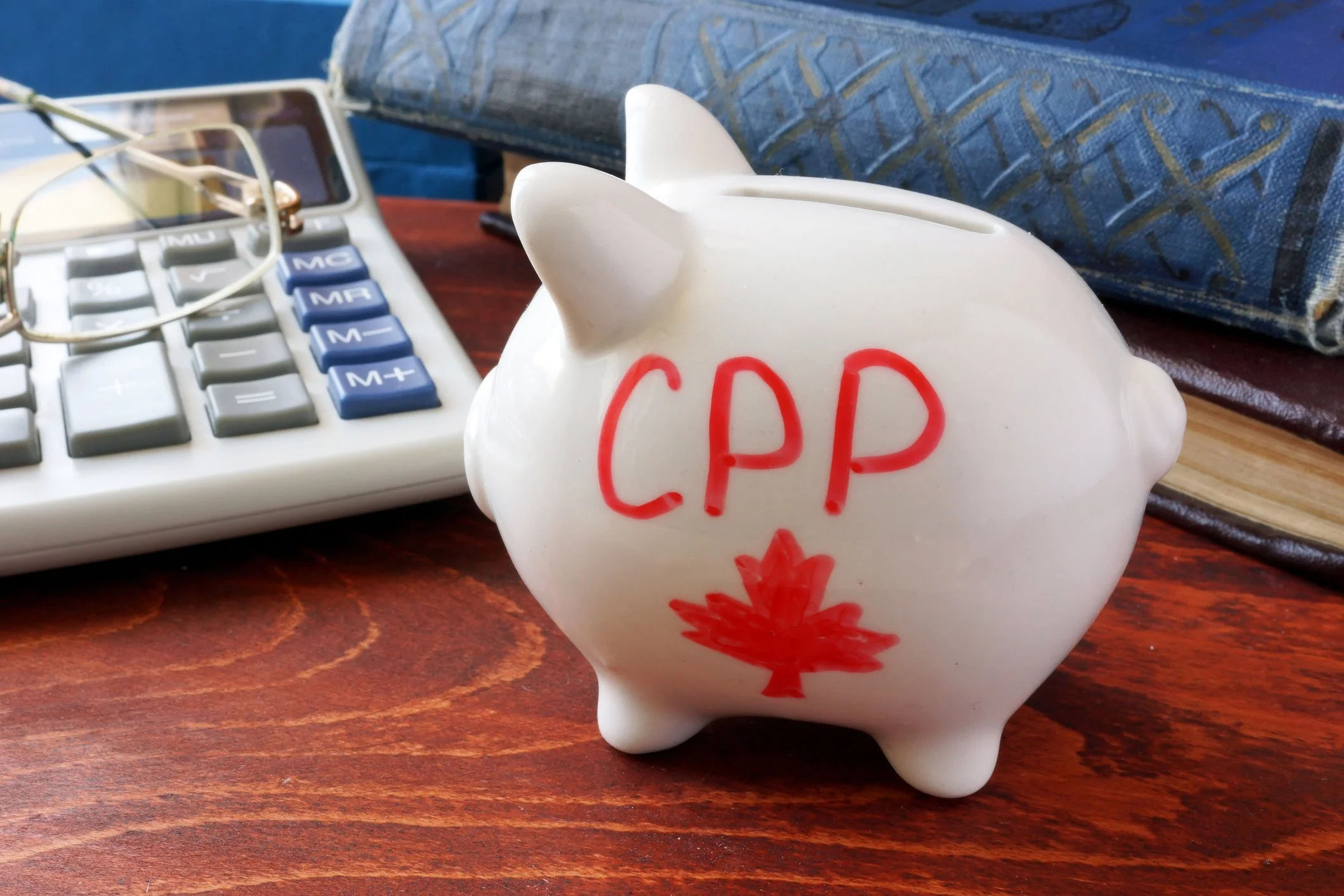
To Be Prepared, we should understand the sources of retirement income. This blog has a look at the primary Government of Canada retirement benefit programs.
Canada Pension Plan
CPP, started in 1966, is funded by employers and their employees. The employers put in on your behalf. This is your money. It does not come from taxation in any way. The government’s role is managing your money until you ask for it back.
CPP benefits received are based on income earned during your work life. They are adjusted for inflation, based on the consumer price index (CPI).
Current fund size is $778 billion. In 2023, contributions were $75 billion and benefit payments were $56 billion. This is one of the “Maple Eight” largest pension funds in Canada.
The Investment Board has actively managed this fund for the last 20 years, rising from 150 employees to now 2100 at an annual cost of $6 billion. The result? They have under-performed the general market since 2007. (1)
Old Age Security and Guaranteed Income Supplement
OAS started in 1952 and GIS in 1967. Unlike CPP, OAS & GIS are funded by the Government of Canada from general tax revenues. Most provinces provide additional, automatic benefits to those receiving GIS.
Again, unlike CPP, OAS and GIS are based on income during retirement. They too are adjusted for inflation based on CPI. Further, you do not need to receive CPP to receive these benefits. OAS will be paid to you then clawed back via tax filing if your income exceeds a preset level. GIS will only be paid to you based on the combination of marital status and maximum income level.
OAS and GIS benefit payments for 2025 are estimated to be $81 billion, or 17% of the total federal budget. The largest line item on the federal books.
Poverty in Retirement
The combination of CPP, OAS, GIS, provincial supplements and GST/HST credits help ensure that about 94% of Canadian seniors live above the poverty line. This figure is disputed by other measures, which place the number at 89%. (2) The largest portion of seniors living below the poverty line are living in an expensive community (Toronto, Vancouver, etc.), are single, &/or are new to Canada.
It is this 6-11% shortfall that becomes the responsibility of the family and the community – cities & towns, food banks, churches, additional non-profits. Should this be a family and community issue, or should we consider a form of universal basic income for seniors?
Population Change
Statistics Canada forecasts (3) the change from 2021 to 2051 to be:
· Working Age (25-64) 22% growth
· Seniors (65+) 69% growth, 3x working age
Will the working age taxpayers keep up to the faster growth in retired seniors and their need for OAS, GIS and related support? Plus, seniors’ need for increased health support as they age, and governments need to service an ever-growing debt.
The action I’d offer from this blog is to continue to educate yourself on this subject and all subjects related to your finances. Knowledge is power.
Further detail on these programs are available at Canada.ca.
1. https://pensionpulse.blogspot.com/2025/06/cpp-investments-responds-to-andrew.html
3. https://www.environicsinstitute.org/docs/default-source/default-document-library/read-the-report62091fc9-b2a5-4626-add0-ad3b575691ea.pdf?sfvrsn=8eb2f456_1

Financial Advisors
Caveat Emptor
Caveat Emptor
Caveat Emptor is Latin for buyer beware. This phrase certainly applies to whoever you choose to work with your finances. This blog’s intent is to educate and assist you in warily ‘buying’ (choosing) the financial advisor(s) who are best for you.
Fundamentals
A financial advisor is really a combination of a Financial Planner and an Investment Manager. Or your advisor will provide you with one of these services and refer you to someone else for the other. Either way, you need both.
Financial Planner
A financial planner is generally the person who understands how to plan your finances. This includes not only budgeting and saving but also tax planning, insurance, estate planning, and decumulation in retirement. They typically operate powerful, expensive software that can collect a ton of input on your situation, set some assumptions with you, then forecast several financial scenarios into your future.
Investment Manager
An Investment Manager is generally the person who provides two main functions:
· Taking the output from the financial plan and working towards meeting or beating the minimum return on investment; and,
· Managing the cash flow between you and your investments
To be a wary buyer, you should be considering your financial advisor’s education, employment, and several additional factors. Let’s look at some considerations:
Education
Just like doctors, nurses, teachers, lawyers, accountants, plumbers, electricians, car mechanics, etc., financial advisors have regulated training. Regulated financial advisors are professionally trained and belong to regulating organizations with ethical standards.
· Typical Canadian certifications for financial planners are Register or Certified Financial Planner (CFP) and Chartered Life Underwriter (CLU)
· The typical Canadian certification for investment management is Chartered Investment Manager (CIM)
Note these are different educations. A CIM managing your finances is not trained to offer financial planning, unless they also have CFP or CLU training to be a planner.
Employer Bias
Where your financial advisors work matters. Planning, insurance and investment decisions can all be subject to the advisor’s employer bias. They may be employed at your bank, your credit union, an insurance company, a wealth management firm or self-employed.
At one end of the bias spectrum, chartered bank employees may tend to sell you investment products managed by their bank as opposed to ones provided by their many competitors. They may also recommend continuing a loan with them rather than paying it off. Insurance employees may sell you their insurance instruments, possibly over-insuring you or insuring instead of investing. In all cases, their bias is to retain fees and revenues to their employers’ benefit, possibly to your detriment.
At the other end of the bias spectrum, a self-employed CFP will charge you an up-front fee to create your financial plan, ensuring complete lack of bias.
Pitfalls
The biggest pitfall in selecting financial advisors is not taking the time to ask some key questions. A great example of seven key questions is published by the Canadian Securities Administrators (1).
Some other pitfalls to consider:
· Believing your advisor is doing a good job because they’re delivering double-digit returns for the last three years. The markets are doing that themselves. They just have you following the markets. What occurs when the markets drop? Give credit where it’s due.
· ‘My advisor is nice to work with.’ That’s fine, I like working with nice people too. But the primary need is for them to be qualified and deliver on your plans and investments.
· Job titles like ‘mutual fund representative’ and ‘financial advisor’ do not by themselves qualify someone to be your financial planner or investment manager. Without external training and regulation, these titles should have the word ‘salesperson’ in them.
In Conclusion
Managing your money is very important! To Be Prepared, treat it that way. Objectively evaluate and select your financial planner and investment manager. They work for you, and they should be the best you can find. Caveat Emptor.
PS. Invest time to watch https://www.youtube.com/watch?v=ooz0LgBWqfE for valuable content on Financial Advice in Canada (2). Topics include - misguided trust in big banks; insurance companies; insurance, too much & not enough; passing on the cabin; AI & fintech; and more.
2. The Wealthy Barber Podcast #29, interviewing Jason Pereira CFP, RFP

Bitcoin
An Investment in the Future?
An Investment in the Future?
Since Bitcoin began use in 2009, it is estimated there are now 100 million Bitcoin owners or about 1.3% of the world’s population. As the world’s first and largest cryptocurrency, it has become as synonymous with crypto as Kleenex has with tissue paper.
What is it?
To a layman like me, it’s a recently created digital-era money, one that shows potential to act as a financial haven (like gold has for millennia) as it continues to mature.
It has a limited supply, 21 million eventually with over 19.9 million already in existence. It is decentralized, meaning no one central authority, administrator or bank controls it. It is more expensive to create or ‘mine’ as time advances, because increasing amounts of computing power (energy) are needed.
It has a detailed technical description of how it works readily available to all on the internet. No secrets or surprises.
It is unique from all other crypto currencies. Many are just schemes to make their creator rich at your expense.
How does it work?
Anyone can buy and sell Bitcoin (BTC) with dollars. All you need are some basic computer skills and an account at one of many reputable online exchanges (like banks for crypto). Once you own BTC, you can store it on the exchange or take it offline and store it on a fancy thumb drive.
You can use BTC to buy and sell, although the transactions can take minutes (vs seconds with credit & debit cards). Technologies are being developed to take BTC-based transaction times down to seconds.
Finally, CRA has been taxing BTC since the early 2010’s. They treat it as a commodity, subject to capital gains tax.
What about its price volatility?
It is highly volatile, relative to dollars. Keep in mind it’s only 16 years old and it is on a steady trend of gaining value over time against all countries’ dollars and gold.
Will it eventually go to $1 million or to $0?
Good question. No one can be certain. A couple thoughts:
· With each passing year it doesn’t get hacked or otherwise compromised, the $0 scenario becomes less likely
· The steady trend of gaining value relative to dollars and gold, reaching a value higher than the current USD $110,000 becomes more likely
Should You Own Some?
If you’re interested in new tech, and you have the time, it’s something you can learn for a very small investment in time and money.
If you like speculative (high risk, high return) trades, then learn BTC’s ~4-year cycle of highs and lows. It has been repeated 4 times thus far.
If you look to the future and see the end of Fiat (1) currency, with return to real assets, then consider holding BTC as a small element of your real asset holdings.
We own a little bit, with all three of these reasons playing a factor in the decision. So far, so good.
Be Prepared. Invest in the future, not just the present.
1. Fiat, A reset is coming, October 25, 2024, Be Prepared blog

Decumulation
Focus on Retirement: A Book Review
Focus on Retirement: A Book Review
Retirement Income for Life: Getting More Without Saving More is a Canadian-based book by Frederick Vettese. It is a National Bestseller. The updated Third Edition was released in 2023. I’ve recommended this book to a few readers already. It’s time to recommend it to all of you in my age group.
While most retirement books focus on accumulation, few focus on what comes after. This book assumes the saving phase of your life is over or nearly over. Rather, decumulation is about turning the savings you already have into a steady income stream that will last for the rest of your life.
Part 1: Identifying the Decumulation Problem utilizes and fictional couple on the verge of retirement to introduce the reader to the difficulties faced when one shifts to drawing down their nest egg. This Part 1 assumes the example retirees do everything ‘by the book’ yet run out of money.
Part 2: A Five-Part Solution introduces five ways our fictitious retirees can enhance their strategy to ensure they don’t run out of money. The solutions include reducing fees, risk transfer to the government through CPP and OAS planning, consideration of an annuity for greater risk transfer, use of a free calculator to forecast retirement income, and a backstop if needed to generate income. Each may or may not work for your situation, but the gains for the example retirees are provided.
Part 3: Exploring Other Situations looks through a range of circumstances including retiring single, early retirement, not ready to retire, a spouse dying young, and high-net-worth couples.
Part 4: Tying Up Loose Ends and Part 5: Making It Happen do as their section titles indicate. They address a few other moving parts in a decumulation strategy then talk about how to action your plan.
Throughout, definitions are provided where needed, charts and graphs are used to enhance descriptiveness of the book, then it closes with three useful Appendices.
It’s a bit of a thick read, being all financial in nature. But if consumed in smaller bites, there is a great deal relevant of Canada-specific information to help you Be Prepared.

Nothing Stops This Train
Walter White on Deficits
Walter White on Deficits
Breaking Bad character Walter White starts into meth production just to make ends meet. But as he progresses, growing power overcomes his self-control. Eventually, when his criminal colleagues suggest they stop and lay low, he responds with “The meth keeps flowing no matter what. We aren’t ramping down. We’re just getting started. Nothing stops this train. Nothing.”
Author Lyn Alden uses this analogy in her newsletter (1) and many subsequent YouTube interviews as a parallel to governments indefinitely running high fiscal deficits. While her example focusses on the US, a version of the same thing is occurring in most western countries including Canada. She examines the cause, the low probability of change, and investment implications for this fiscal dominance.
Some Causes
· Unbalanced social security, fewer workers supporting increased number of retirees
· Healthcare spending, its inefficiency and demographic challenges
· Spending on war and military is continuing and now growing
· Accumulated debt interest is growing with each year’s deficit and increasing rates
Low Probability of Reduction
· Polarization between political parties, except agreement on continued deficits (kicking the can down the road), has continually increased since the 90’s
· Any government austerity (cost saving) programs will probably harm the stock market, in turn harming government income taxed from investors
Investment Implications
Alden’s long-term investment timeframe is five-to-ten-years. To develop a plan for this duration, she goes looking for historical datasets. For developed countries she finds the nearest example in the 1940s, a long time ago with many different variables. For emerging markets, there are examples in more recent decades on how they deal with large fiscal deficits. Netting in the similarities and differences from the datasets, she proposes the general trends we may apply to the current fiscal dominance period:
· Governments often try to restrict the flow of capital, subtly or overtly
· Stock prices are not as likely to be as weak as you might think, since the currency they’re measured in is also weak
· Inflation is likely to be an issue, either persistent or in waves
Those general trends steer her to a tentative 5-year outlook:
· US stocks: Overall they’re already expensive, but case by case reasonably priced individual stocks could offer opportunity
· International stocks: Relative to US stocks, an outperformance may be expected, and at least some exposure to allow for the possibility
· Government bonds: Not a positive outlook in terms of maintaining their purchasing power
· Gold: Remains interesting and is under-owned by most metrics. Strong base case.
· Bitcoin: Has been highly correlated with global liquidity, which should continue. Very strong case with consideration for high volatility.
These trends are clearly important in her Newsletter Portfolio, circulated with her newsletter every 6 weeks to over 100,000 subscribers. I’m one of them. In a recent interview (2), she confirmed her thesis, timeline, and strategy for fiscal deficits.
Be Prepared. Ensure your investment plan considers what Walter White (governments) continue to do with his meth (their fiscal deficits).
1. September 2024 Newsletter: Why Nothing Stops This Fiscal Train, Lyn Alden
2. Nothing Stops This Deficit Train, Lyn Alden on WTFinance, July 10, 2025, YouTube

Owning Stocks
Which method is best for you?
Which method is best for you?
Once you have addressed the big picture of asset class diversity between stocks, bonds, real estate, commodities, cash and other savings and investments, then you need to drill down and determine how to own each one.
For stocks, there are three main avenues of ownership:
· Direct-owned, individual stocks
· Mutual Funds
· Exchange Traded Funds (ETFs)
Individual Stocks
Long before funds (a collection of stocks) came around, individual stocks were the only way to go from the late 1700’s until present. They are still the way to go if you:
· Are willing to invest at least an hour per stock per month
· Are comfortable with some greater risk to pursue greater reward
· Clearly understand if you want to trade (daily, weekly) or buy and hold (Buffett)
Mutual Funds
Mutual Funds arrived as an alternative to individual stocks almost a hundred years ago. These funds are actively, professionally managed with the idea that the management will give better returns than the generic market. They are the way to go if you:
· Want to invest little or no time
· Prefer the relative safety of multiple stocks in a collection representing a market sector (utilities, tech, bonds), the whole stock market (TSX, S&P500), a whole economy or global region (Europe, Asia)
· Are comfortable paying additional fees for the active management
ETFs
ETFs arrived about 35 years ago as a new iterative variation on mutual funds. They trade and are taxed a little differently and are likely to be passively managed though some are actively managed. They are the way to go if you:
· Like the benefits of funds vs stocks
· Prefer an option for lower management cost
· Looking for a market method to hold commodities like gold or copper
Funds - Active vs Passive Management
If you prefer the active management approach, consider rereading The 1% Rule blog from a couple months back.
SPIVA (S&P Index vs Active) Research (1) reports that 80% to 90% of active managed funds over time have underperformed passive index type funds. Yes, you read that right!
Always remember you pay fees for active management. You should be confident you are receiving value from those fees or be reducing them.
What are we doing?
Our big picture diversification includes 20% in stocks. This is in sector-specific individual stocks where we invest 1 hr/stock/month of my time plus 0.5% on expert advice. We sold our mutual funds years ago. We own a few ETFs to hold commodities.
Be Prepared. Invest the time needed to make good decisions. Do your own research and discuss it with your advisor. It must be right for you.
1. https://www.spglobal.com/spdji/en/spiva/article/spiva-canada

Beat Inflation
Gold is your friend over the long term
Gold is your friend over the long term
I was talking to a reader recently about what is truly valuable. They correctly pointed out that you can rely on a $100 bill to be worth the same amount tomorrow as it is today and as it was yesterday. This is almost a given fact in the short term (days, weeks, months). But we all know that over the medium term (years), inflation is slowly but steadily eating away at the value of that $100 bill. What about the long term (decades)?
A constructive way to confirm cash value is being destroyed over medium or long term is to look at housing prices as a proxy for our cost of living. Canadian finance encyclopedia WOWA recently published a chart showing benchmark Canadian home price (1) over my adult lifetime. 40 years ago, in 1985, the average Canadian home price was about $100,000. Fast forward to 2025 and the price is about $700,000. It’s gone up 7X in 40 years. And this is through a period of historically low inflation.
The same chart then includes gold as a second measure of value. In 1985, 7 kilos of gold would buy that average home. In the 40 years since, house prices have varied in the range of 7 to 14 kilos of gold. At present, 7 kilos of gold will still buy you that average home!
Very interesting. Gold and the cost of living (housing) maintain the same value over time. Cash doesn’t.
So what?
You can’t buy groceries, cars, or even houses with gold. Canadian dollars are the only way to get what you need in the short term. You can’t live without dollars.
And, if you only consider gold price in relation to the dollar, over a short or medium term, you will rightfully say that gold is more volatile – going up or down in price – relative to the dollar. Then where does gold fit in?
It fits in the longer term – a decade or more – where gold is retaining value while the dollar is steadily losing to inflation.
If you measure your remaining time on this earth in a decade or decades, that’s long term. Long enough term to Be Prepared and protect some of your future buying power with gold savings. A late 2024 MoneySense article (2) suggests a small holding – less than 10%. The Be Prepared Diversity blog in September 2024 showed a few examples from smart money thought leaders where gold can serve as 20-25% of total savings and investments.
We practice what I preach. We hold between 10% and 20%, including gold producers.
Beat inflation over the long term. Get Gold!

The 1% Rule
Making the most of your investments
Making the most of your investments
I learned the 1% rule early in my career, when a business leader reviewed a budget I’d help produce then said “Good, now see if you can achieve just 1% higher revenue or 1% lower expense when implementing the budget over the next year.” Why, we said? “Because by achieving 1% more on a budget with 6% net income, you will end up at 7% net income. That 1% added to 6% produces 17% (1÷6=.167) more net income!” My mind was blown.
Can the 1% rule be applied to personal finance? Yes, and here’s how.
Frederick Vettese in his book Retirement Income for Life (1) proposes reduced fees as his first of five enhancements to improve your retirement finances.
Let’s assume you’re averaging 7% annual return on your investments. That’s after fees and before inflation. Jason Heath reports typical Canadian Mutual Fund fees are 1.8% (2), in agreement with Vettese. And the Bank of Canada targets 2% inflation. Let’s find a net result:
· You may have grossed 8.8% on your investments less the1.8% fees for the 7% investment return. Then subtract 2% inflation. Your actual net is 5%
But if you can reduce your fees by 1% (from 1.8 to 0.8 in our example):
· You have still grossed 8.8% on your investments less the 0.8% fees for a new 8% investment return. Then subtract 2% inflation. Your actual net is now 6%
Adding 1% onto the 5% you were receiving delivers a 20% (1÷5=0.20) gain! Now your mind should be blown.
Back to Vettese. He suggests it is reasonable to manage your fees down to 0.6%. For reference, we pay 0.7%. So, it’s realistic to do even better than the 20% gain in the example.
How can you Be Prepared? Review the fees you are paying. Are you closer to 1.8% or 0.6%?
And remember, just 1% of $1,000,000 savings & investments is $10,000. Every year! $250,000 over 25 years!! Reason enough I hope to review your fees.
1. Retirement Income for Life: Getting More Without Saving More, F Vettese, 3rd Edition, 2023
2. Advisor Fees, hidden and otherwise …, Jason Heath article in the Financial Post, Feb. 2023

Real Estate - Farmland
The Ultimate Real Asset
The Ultimate Real Asset
This final of three blogs on real estate will tackle farmland. While it is a type of real estate, farmland is so much more. Farmland is foundational for civil society as the place where our food is grown and harvested. And, unlike all the other types of real estate, it is a limited resource. ‘They aren’t making any more of it!’ my Mom used to say.
Here’s some food for thought on the ultimate real asset:
Farmland Value and Availability
For order of magnitude, a quarter (160 acres) of land can easily cost $250,000 in Saskatchewan where a farmer typically operates 10, 25, 50 or more quarters. It’s very different in Ontario where the cost is 5x higher, while a farm is typically only 1 or 2 quarters in size.
Farmland prices continue to rise across Canada, as they have since the 1990s. Canadian farmland prices rose another ±10% in each of 2023 and 2024. (1) In addition, it continues to deliver ± 4% yield from per year from rent and productivity.
Farmers expand their operation and grow their net worth through the acquisition of new farmland. They are, and should be, the primary ‘first choice’ owners of farmable land. As such, Canadian farmland ownership is not available through the stock market, and farmland is relatively (but not absolutely) unavailable to the public.
Direct Ownership
Farmers and a few private investors are the direct owners of farmland. This ownership covers about 98% of all farmland in Canada (2). Farmers, beyond what they own, commonly rent a significant portion of the land they farm. Owning land and renting to a farmer is the entry point for us in the public to become an investor in the ultimate real asset.
A small number of our blog readers group are direct farmland owners. Congrats!
Investment Funds
If you are an Accredited Investor in Canada, there are a handful of Trusts (like REITs) which own and rent about 2% of Canadian farmland. These generally provide a relatively good return on investment over time. However, they have become a competitor to farmers. As such I am not a fan.
What Can You Do?
I believe farmland ownership is the best long-term investment diversity available – better than stocks, bonds, gold, typical real estate or anything else. The best way to Be Prepared.
I would recommend – if you want some diversity and security – seek out a way to become a direct owner. If not with family, maybe with a friend who farms or a friend of a friend. You won’t regret it.
1. www.fcc-fac.ca/en/knowledge/economics/2024-farmland-values-mid-year-update
2. https://www.theglobeandmail.com/business/industry-news/property-report/article-growing-farmland-values-seed-transition-to-non-farmer-investment/

Real Estate - Investment
Diversity from Stocks & Bonds
Diversity from Stocks & Bonds
This second of three blogs on real estate will focus on using real estate as a means of diversifying beyond stocks and bonds into real assets.
This blog’s group of readers includes several people who already are diversified into real estate beyond their own home. These people have 1, 2, 4, 10, even 20 properties that they own directly as a main business, a side business, or a small-scale investment. All of them are good. My compliments to you.
Here’s some food for thought on different ways you can make a real estate investment.
Direct ownership:
Direct is the best type of real estate investment because you directly control decision-making, and I believe this is also one of the few relatively safe places to leverage debt to create net worth over time. You can either operate the property yourself or choose to pay a manager for the property’s operation needs. Both are good options, whatever suits your interests and life circumstances.
Trusts outside the market:
Real Estate Investment Trusts (REITs) have become a popular means of gaining real asset diversity for your investment strategy. Accessing these privately, outside the stock market is available to Accredited Investors in Canada. You are one of many owners who have pooled their funds in a trust. The pooled funds increase the investment options to include larger apartment buildings, condo buildings, commercial buildings, industrial buildings, storage facilities, etc. You have relatively little say in decision-making, no say in operation, but relatively more liquidity than direct ownership and without the volatility of the stock market.
Trusts in the market:
Many REITs can be found on the Canadian stock market. Like the private trusts, your funds are pooled and give nearly unlimited options, little say in decision-making, no say in operation, but with very high liquidity and higher volatility.
Good and Bad Markets:
With Canada experiencing a serious housing shortage, existing homes, apartments, and condos all offer safety for your invested capital. The new development of residences is relatively less safe as the risk of prices dropping over the duration of the development could place your capital at higher risk of loss. And I believe any fund which is active in commercial offices is a risk as society continues to figure out the post-covid work from home phenomenon.
Summary:
If you don’t have any real estate diversity, I recommend you research how to get some. I’d be happy to help.